
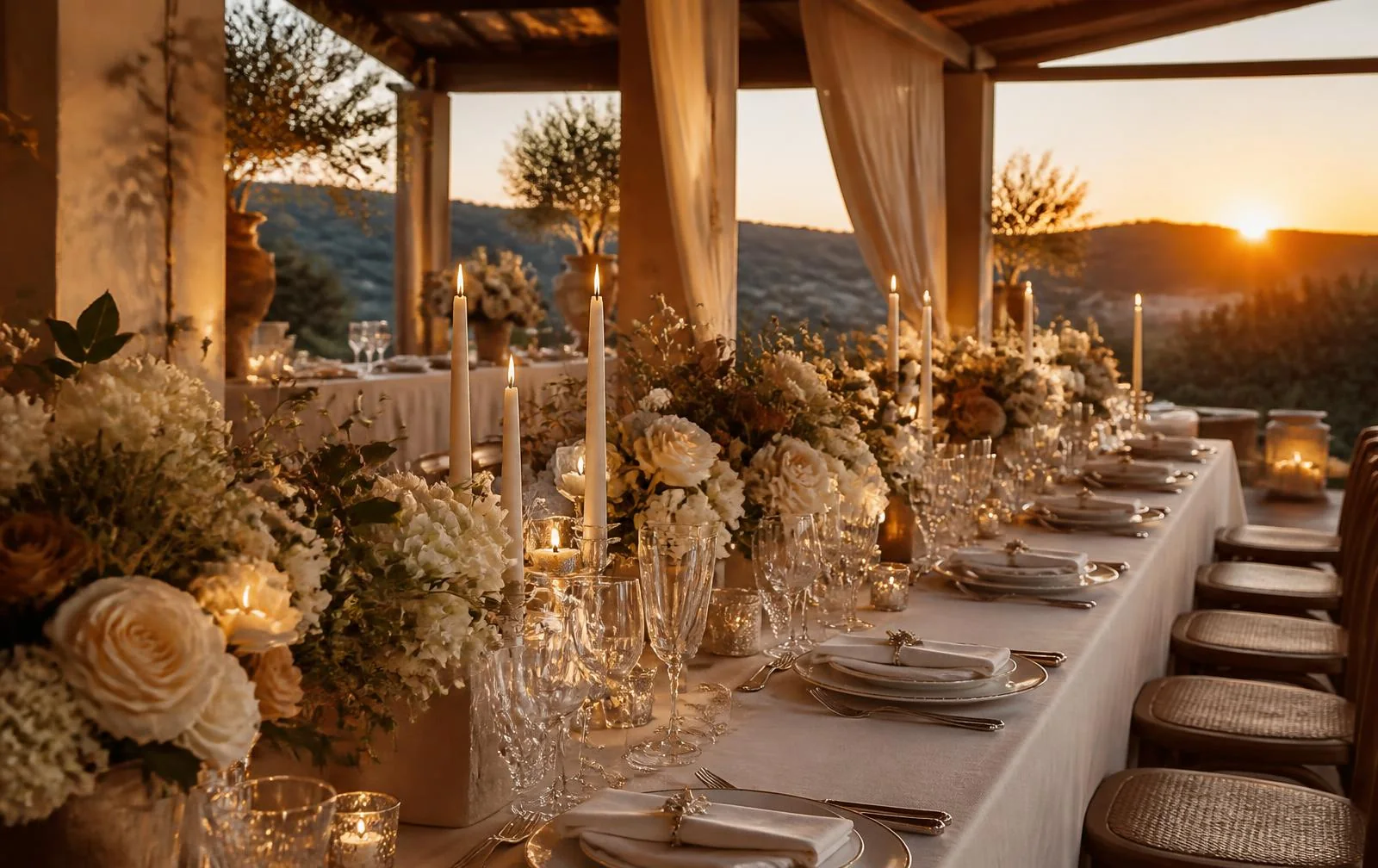
The wedding remains one of the most important celebrations in Brazilian social life. But behind every ceremony lies a market of thousands of professionals, companies, and services that transform a personal decision into an extensive chain of consumption.
The figures help to put this reality into perspective. In 2024, Brazil recorded 948,925 civil marriage registrations, according to the Brazilian Institute of Geography and Statistics (IBGE). For 2026, however, projections from the events market point to 472,000 celebrations, with an estimated average spend of R$69,000 and a total value of approximately R$32 billion.
These figures are not directly comparable: the first represents civil registrations, while the second estimates wedding parties. Nevertheless, they help reveal the scale of a sector that brings together gastronomy, decor, fashion, hospitality, photography, entertainment, transport, and an extensive network of specialized suppliers.
More interesting than the market's size, however, is observing how it is changing.
The projection for 2026 indicates a slight reduction in the number of parties compared to the 476,000 estimated for 2025, while the average spend is set to rise from R$66,000 to R$69,000. This suggests a market that is relatively stable in volume but continues to generate high value per celebration. As this nominal increase closely tracks the inflationary environment of the period, it cannot, on its own, be attributed to a real increase in spending or in the sophistication of weddings.
At the same time, a specific portion of this market exhibits its own characteristics. In the high-end segment, professional sources point to investments of R$3,000 to R$4,000 per guest, while destinations and properties in the São Paulo countryside and other regions of the country are transforming the wedding into an experience that can extend over an entire weekend.
It is at this intersection of volume, value, and luxury that the Brazilian wedding market begins to reveal its most important transformations.
A R$32 Billion Market
The Brazilian wedding market has a characteristic that is not always apparent when looking only at the number of ceremonies performed: each celebration mobilizes an extensive chain of products, services, and professionals. In 2026, this chain is expected to generate approximately R$32 billion, according to a projection by Casar.com in partnership with Assessoria VIP. The estimate considers about 472,000 parties, with an average spend of R$69,000 per celebration. (CASAR.COM; ASSESSORIA VIP, 2026).
To understand this figure, it is important to distinguish it from civil registrations. The IBGE counted 948,925 marriages in 2024, based on registrations made in Brazilian registry offices. These are distinct universes: while the Civil Registry Statistics measure formalized marriages, the Casar.com research aims to quantify the market for parties and celebrations.
Still, both indicators help to reveal the sector's scale. A marriage formalizes a union, but the celebration that may accompany it mobilizes a much larger network: venues, gastronomy, decor, flowers, photography, music, fashion, beauty, transport, accommodation, and specialized suppliers.
The budget distribution also shows where a significant part of this value is concentrated. According to the research by Casar.com and Assessoria VIP, catering represents 17.51% of the average total cost, followed by the reception venue at 10.42%, and decor at 9.63%. Together, these three items account for just over 37% of the average budget.
This concentration seems far from coincidental. Food, venue, and ambiance are precisely the elements that largely determine the experience perceived by guests and the atmosphere created by the couple. Casar.com itself highlights these three pillars as central components of the celebration experience.
There is, therefore, an important difference between the size of the market and how this money is distributed. The R$32 billion figure does not just represent the cost of holding a ceremony: it represents the sum of thousands of decisions that, together, form one of the most complex consumer ecosystems linked to celebrations.
And perhaps it is this very characteristic that explains why the wedding market can remain economically relevant even in a scenario of stable party numbers. When volume does not grow significantly, the value and experience of each celebration become even more important.
More Value Per Celebration
The projection for 2026 points to 472,000 wedding parties, compared to the 476,000 estimated for 2025. The difference is small, about 0.8%, and the research by Casar.com in partnership with Assessoria VIP characterizes the outlook as stable, with occasional fluctuations and no major leaps in growth.
At the same time, the projected average spend is set to rise from R$66,000 to R$69,000. In nominal terms, this represents an increase of approximately 4.5%. The market is therefore expected to generate around R$32 billion in 2026, even with a slightly lower number of celebrations. (CASAR.COM; ASSESSORIA VIP, 2026).
But there is an important caveat to this reading. The increase in average spend cannot automatically be interpreted as a real increase in the value of the parties. The cumulative IPCA (Brazil's main inflation index) for the 12 months ending in June 2026 stood at 4.64%, almost on par with the 4.5% nominal growth observed in the projected average spend. (IBGE, 2026)
This means that, with the available data, it is not possible to state that Brazilians are effectively allocating more money, in real terms, to each wedding. A relevant part of the difference may simply reflect the price updates of the products and services involved in holding the celebrations.
This distinction is important because it changes the interpretation of the market. The projected scenario for 2026 is not one of significant growth based on the quantity of weddings, nor necessarily of a real increase in the average budget. It is, rather, a market that remains at a high and relatively stable scale, sustained by thousands of celebrations with a high volume of consumption.
And there is yet another layer to this analysis. The national average conceals vast differences between celebration profiles. A R$69,000 wedding represents a general market benchmark, but it does not necessarily describe the behavior of the high-end segment, where the budget per guest can reach multiples of this average.
It is precisely in this difference between the average market and the high-end market that some of the sector's most interesting transformations begin to appear.
When the Wedding Becomes a Complete Experience
In the high-end market, the value of a wedding is not necessarily related only to the size of the party or the number of guests. Increasingly, the experience built around the celebration—the location, the privacy, the gastronomy, the personalization, and the time shared with guests—becomes part of the very concept of luxury.
A concrete example of this market can be seen in São Paulo. In an interview with VEJA São Paulo, wedding planner Ana Paula Tabet, who has been working with high-end celebrations for about two decades and has organized weddings for football players, stated that the luxury events she organizes have an average cost of R$3,000 to R$4,000 per guest. She notes that there are celebrations below and above this range, but the figure offers an important reference for understanding the gap between the national average spend and the segment with greater purchasing power. (VEJA SÃO PAULO, 2026)
If the projected average spend for the Brazilian market in 2026 is R$69,000 per party, Tabet's reference shows how the high-end market operates on another scale of investment. More than a price difference, however, there is a difference in the very construction of the celebration: the greater the degree of personalization and exclusivity, the more elements are designed specifically for that event.
This logic also appears in the growth of destination weddings. In São Miguel dos Milagres, Alagoas, local entrepreneurs currently estimate 60 to 70 weddings per year. For many of these, guests arrive two or three days before the ceremony and stay on after the party, boosting hotels, restaurants, and suppliers of decor, photography, music, and gastronomy (FOLHA DE S.PAULO, 2026).
The phenomenon helps to reveal an important transformation in luxury consumption. According to Mariana Cerone, a professor of luxury consumption at ESPM interviewed by Folha de S.Paulo, high-net-worth consumers have increasingly come to value exclusivity, authenticity, privacy, and personalization over explicit ostentation. The landscape, the seclusion, the limited number of accommodations, and the ability to offer a private experience to guests become part of the perceived value.
This is a shift that can also be observed in the São Paulo countryside. Fazendas (farm estates) now account for about 8% of venue choices in the state, according to data from Casamentos.com.br, with an average of 140 guests. In the capital, the share indicated by the same platform is approximately 1%, with an average of 158 guests.
The difference is revealing. For certain couples, leaving the capital does not simply mean finding a larger space. It means changing the very logic of the celebration. The property becomes part of the experience, and nature, architecture, accommodation, and privacy can be integrated into the wedding.
In other words, the destination becomes part of the party.
This movement helps explain why the high-end market has found in fazendas, rural properties, and destinations far from major cities a new way to express exclusivity.
And perhaps this is one of the most significant changes in contemporary luxury: it is no longer enough to offer more; one must offer something that cannot be easily replicated.
The Wedding Beyond the City
The search for venues outside the capital of São Paulo does not seem to be just a matter of location. In the state of São Paulo, about 8% of couples registered on the Casamentos.com.br platform choose fazendas for their celebration, whereas in the capital this share is approximately 1%. The difference helps to reveal the influence that the countryside and the city's surrounding areas have come to exert within the wedding market.
Among the venues surveyed in the state, the platform records an average of 140 guests per wedding and notes that 52% of fazendas offer accommodation for guests. The countryside wedding, therefore, begins to take on different characteristics from a traditional celebration held in an urban hall: the space can host not only the party but also the guests' stay over part of the weekend. (CASAMENTOS.COM.BR, 2026)
The location also helps to understand this movement. A large portion of the wedding fazendas researched in the region are situated approximately 40 to 70 kilometers from the capital, a distance that allows the couple to get away from the urban environment without necessarily turning the celebration into a long-distance journey. (CASEME, 2025)
This format expands the creative possibilities. A rural property can bring together the ceremony, reception, accommodation, gastronomy, and different moments of conviviality in a single space. The landscape ceases to be mere scenery and becomes part of the experience; the architecture, nature, and the history of the place itself can become elements of the celebration.
Seasonality data reinforces that this format has its own dynamic. In the state of São Paulo, November accounts for 14% of weddings held at fazendas, October for 12%, and September for 13%. Together, these three months represent 39% of the celebrations registered in this category. Saturdays, in turn, host 63% of fazenda weddings, while Sundays account for 21%. (CASAMENTOS.COM.BR, 2026)
The concentration in these months also helps explain why planning becomes particularly important for this segment. When a wedding depends on a specific venue, accommodation, specialized suppliers, and a favorable weather window, availability ceases to be just a matter of scheduling and becomes part of the celebration's strategy.
There is also a more particular modality within this movement: families who choose to hold the wedding at their own fazendas, rural estates, or properties. We have not, as of yet, found reliable statistics to quantify how many celebrations happen this way. Nevertheless, the format deserves attention as it represents an even more radical expression of the search for exclusivity: the space is not just chosen for the wedding but already belongs to the family's history.
In this context, the property can carry memories, emotional ties, and heritage. The wedding takes place in a location that does not need to be rented to acquire meaning—the meaning already exists even before the celebration.
This is a particularly interesting characteristic of the high-end market: exclusivity is not always found in the most sophisticated venue, but in one that could not be replaced by any other.
One Celebration, an Entire Chain
The wedding market involves much more than the suppliers who appear on the couple's contract. Behind a single celebration is a network of companies, independent professionals, freelancers, temporary workers, and small businesses that participate in different stages of production.
Data from the Sebrae Observatory helps to quantify at least a part of this structure. In the subcategory of “Party and Event Venues,” Brazil had 30,401 active companies in December 2025 and 10,436 employees in 2024. São Paulo accounted for 2,385 of these employees, the highest number among Brazilian states. (OBSERVATÓRIO SEBRAE, 2026)
These numbers, however, represent only a fraction of the ecosystem. A celebration involves planners and coordinators, venues, caterers, decorators, florists, photographers, videographers, musicians, DJs, beauty professionals, stylists, tailors, rental companies, transport providers, hotels, and restaurants, as well as an extensive network of specialized suppliers.
There is also a less visible layer: on-demand labor. Assemblers, extra waiters, kitchen assistants, porters, cleaning staff, security personnel, drivers, and various independent contractors may be hired specifically for a particular celebration. In many cases, these are professionals who do not appear as part of a company's permanent structure, but whose participation is indispensable for the event to happen.
This characteristic makes the wedding market especially relevant for small businesses. The event concentrates, in a single moment, a significant number of services that need to be coordinated and executed simultaneously. The more elaborate the celebration, the greater the complexity of this chain tends to be.
In the high-end segment, this dynamic takes on another dimension. The pursuit of personalization leads to the incorporation of specialized suppliers to create specific solutions for that couple, from scenography to gastronomy, from stationery to reception elements, and from the experiences offered to guests to the details of the dessert table.
The wedding, therefore, functions as a temporary economic ecosystem: dozens of companies and professionals may work for weeks or months to produce an experience that, for the guest, takes place over a few hours or days.
And this is perhaps one of the most interesting characteristics of this market. Each celebration ends, but the chain that produces it is far larger than the time in which it takes place.
Where the Value of Experience Lies
When we look at how a wedding budget is distributed, some figures stand out. According to a survey by Casar.com in partnership with Assessoria VIP, catering represents 17.51% of the average total cost of a celebration, followed by the reception venue at 10.42%, and decor at 9.63%. Together, these three items account for 37.56% of the average budget.
The concentration is significant because these three elements do not merely serve an operational function. The catering feeds and receives guests and staff; the venue determines the scale and potential atmosphere of the celebration; and the decor transforms this space according to the identity chosen by the couple. They are, therefore, components that directly shape what guests see, feel, experience, and remember.
The research itself reinforces this interpretation. Marcelo D’Alfonso, CEO of Casar.com, affirms that food, venue, and ambiance remain among couples' priorities precisely because they structure the party's experience.
This data helps to understand an important transformation in the market: the budget is not just allocated to what is necessary for the party to happen, but also to what constructs the perception of the celebration.
It is at this point that the high-end market becomes particularly interesting. When experience takes center stage, elements that might be considered complementary take on new functions. Gastronomy can tell a story; the ambiance can reflect the couple's personality; the service can create a sense of exclusivity; and small details can transform a conventional celebration into something that could hardly be replicated in the same way at another wedding.
In this context, the experience ceases to be a consequence of the event and becomes part of the product being acquired.
This shift also helps to explain why contemporary luxury in weddings need not necessarily be associated with ostentation. A wedding can be sophisticated for the quality of its gastronomy, the precision of its service, the choice of a unique venue, or the way each element was conceived for that couple and their guests.
In the high-end segment, therefore, value is not just in the quantity of items contracted. It lies in the ability to transform each of them into part of a coherent experience.
And this gives specialized suppliers an increasingly important role within the celebration. When a couple is looking for something that is not just correct, but specific, personal, and memorable, the choice is no longer exclusively about a category of service, but also about the vision of the person who will build it.
Gastronomy Takes Center Stage
As we have seen, food and drink represent the largest single portion of the average budget, according to the survey by Casar.com with Assessoria VIP, and their importance goes beyond financial weight. Gastronomy is one of the few elements of a celebration that directly engages the senses and remains in guests' memories through flavor, aroma, presentation, and service. (CASAR.COM; ASSESSORIA VIP, 2026)
In the high-end market, this dimension tends to become even more important. Gastronomy is no longer thought of merely as a necessary structure to serve guests but becomes part of the wedding's identity. Personalized menus, selected ingredients, careful presentation, specialized service, and culinary experiences designed for the event transform the culinary offerings into part of the celebration's narrative.
This shift also expands the space occupied by confectionery. While for a long time sweets appeared mainly as a complement to the meal, today certain creations are designed as elements of presentation, hospitality, and experience.
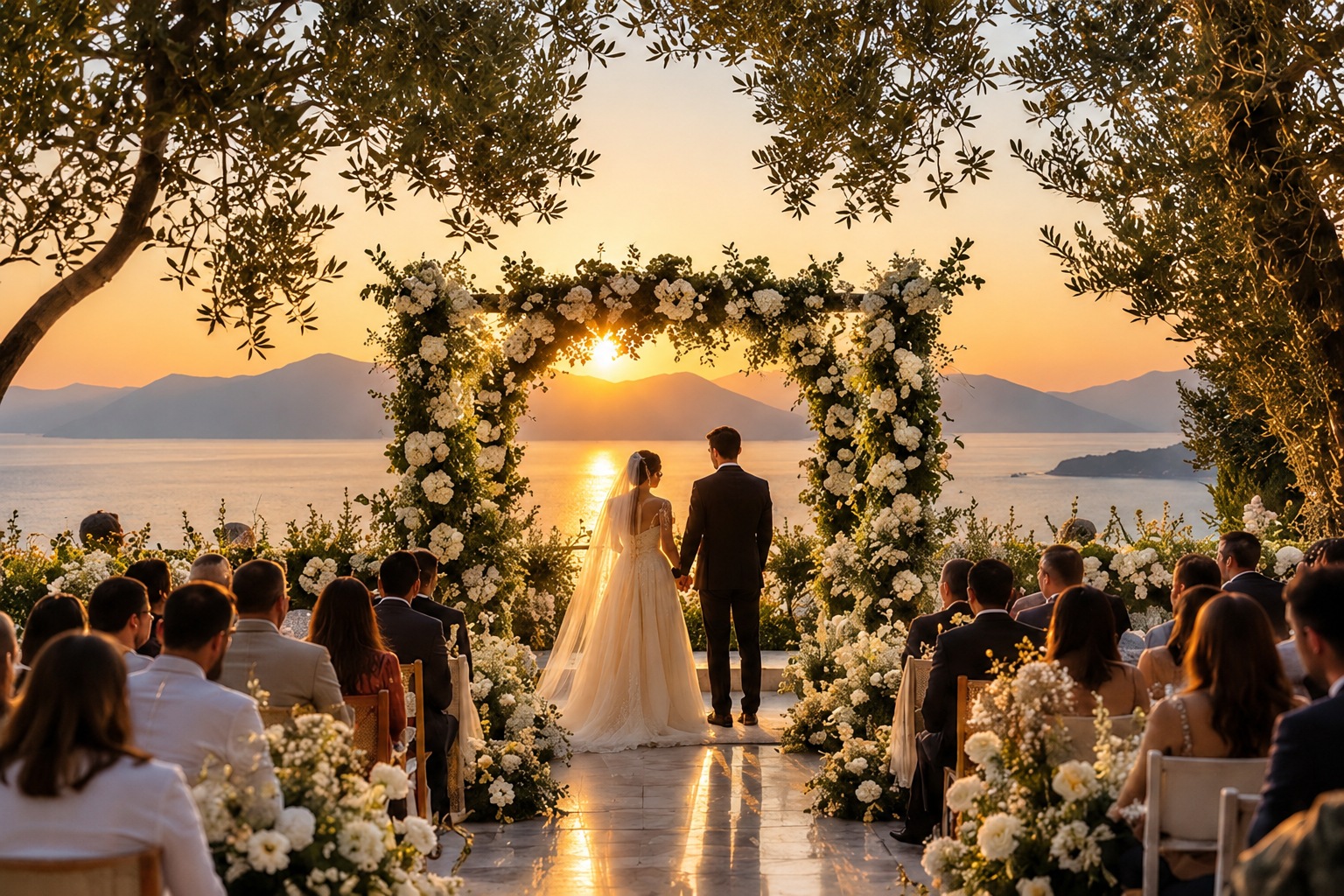
The dessert table itself follows this transformation. As we previously analyzed in our article “The New Generation of Dessert Tables”, it has evolved from being just a space to gather the celebration's sweets to assuming its own role in the visual composition and experience of the wedding.
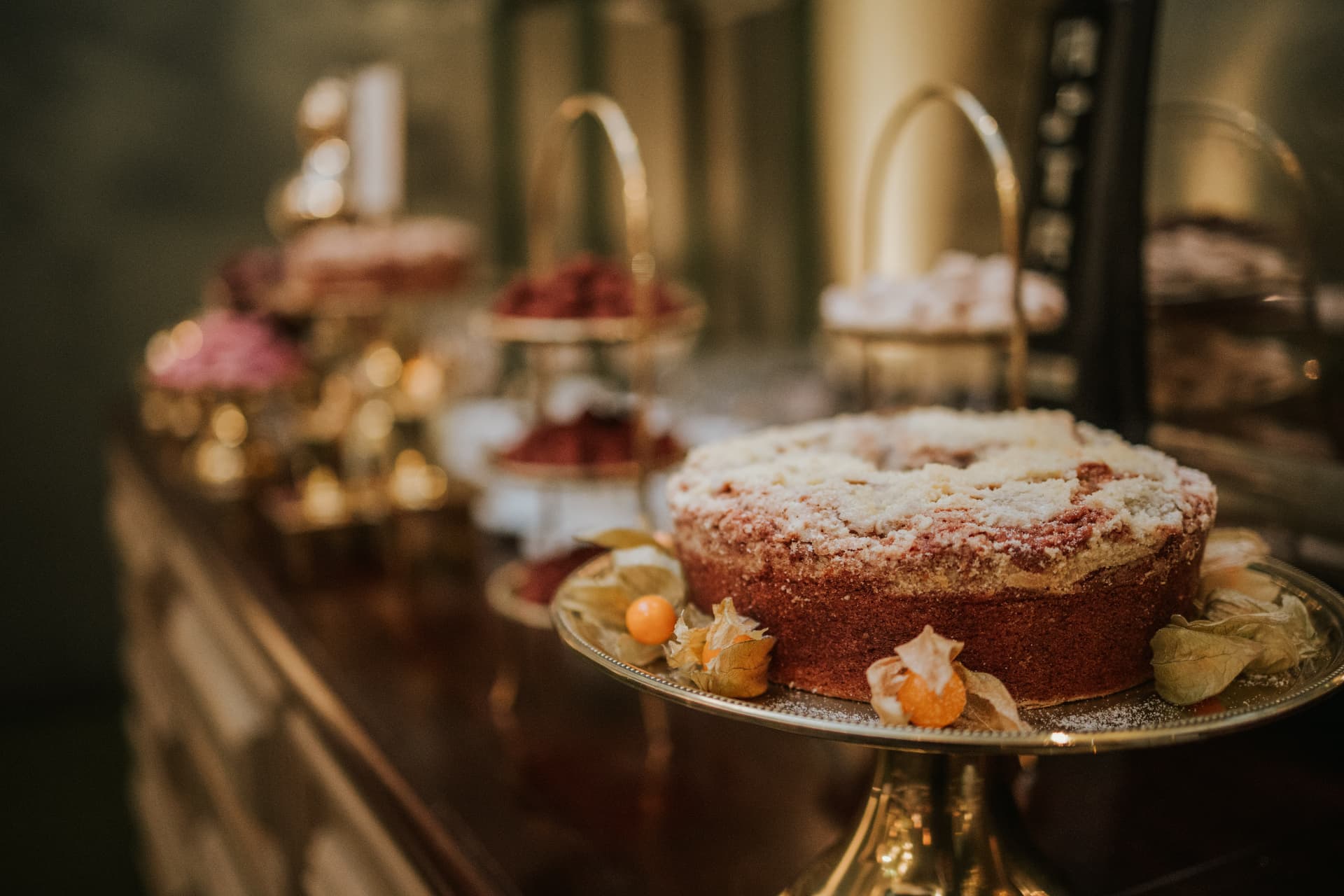
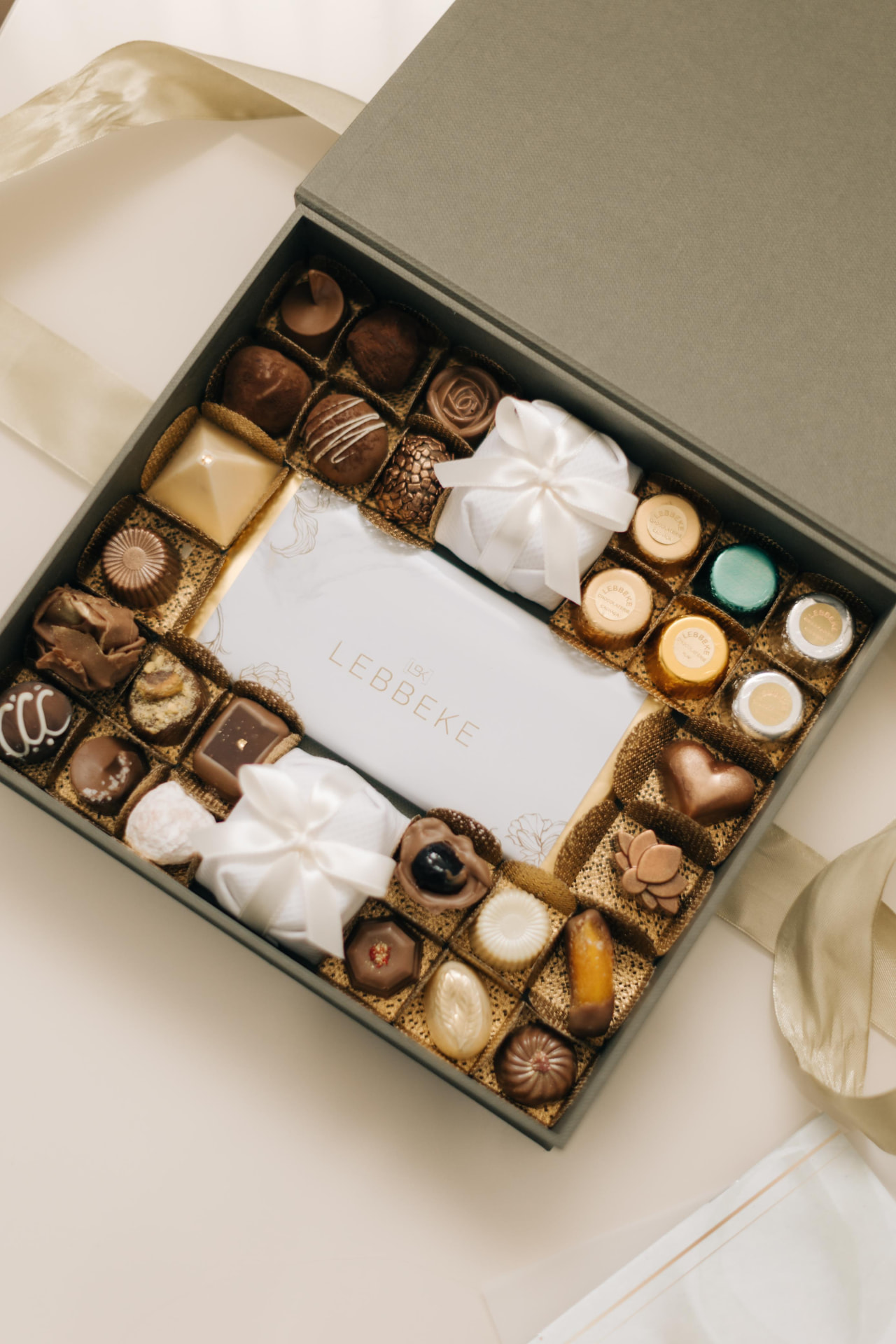
The same movement can be observed with chocolate. In our article, “Chocolate as a Culinary Jewel”, we analyzed how the ingredient has come to occupy a space ever closer to the great expressions of contemporary gastronomy, combining technique, aesthetics, and original creation.
This evolution is especially relevant in the high-end segment because it modifies the very perception of value. A sweet is no longer judged by its flavor alone; its form, finish, presentation, packaging, ingredients, and relationship with the celebration's concept also contribute to the experience.
It is in this context that gastronomy ceases to be just a budget category and becomes a tool for creating memories.
For the couple, it can translate preferences and stories. For the planner and coordinator, it can be a fundamental part of curating the experience. For the guest, it can become one of the elements that remain in the memory long after the party is over.
In the luxury market, therefore, to feed is no longer simply to serve. It is to create an experience that is coherent with the place, the celebration, and the people who are part of it.
Brazil's wedding market is undergoing a transformation that goes beyond the growth or stability of its numbers. The celebration is increasingly conceived as an experience, in which venue, gastronomy, personalization, and exclusivity take on new meanings.
In the high-end segment, this change is even more evident. More than just celebrating, it is about creating an experience that has identity, meaning, and remains in the memory.
References
CASAR.COM; ASSESSORIA VIP. How Much It Costs to Get Married in Brazil: Habits and Trends. 2026.
CASAMENTOS.COM.BR. Fazendas for Weddings in São Paulo State. 2026.
IBGE — INSTITUTO BRASILEIRO DE GEOGRAFIA E ESTATÍSTICA. Civil Registry Statistics 2024. Rio de Janeiro, 2025.
OBSERVATÓRIO SEBRAE. Party and Event Venues: Employment and Companies. 2026.
VEJA SÃO PAULO. ABDO, Humberto. How Much Does a Luxury Wedding Cost? São Paulo, 8 Jun. 2026.
FOLHA DE S.PAULO. Wedding Travel Boosts Tourism in Paradise Destinations. São Paulo, 2026.
CASEME. Fazendas for Weddings in São Paulo. 2025.
Get our next editorials.
Receive the next issues of the Observatory, along with trends, stories and exclusive LEBBEKE content, straight to your inbox.
No spam. Unsubscribe anytime.