
LEBBEKE Editorial No 012 · Weddings
Weddings Around the World: Cultures, Rituals and Celebrations
From centuries-old traditions to contemporary celebrations, different cultures reveal other ways of gathering people, creating rituals and transforming weddings into experiences.
The Wedding as a Cultural Expression
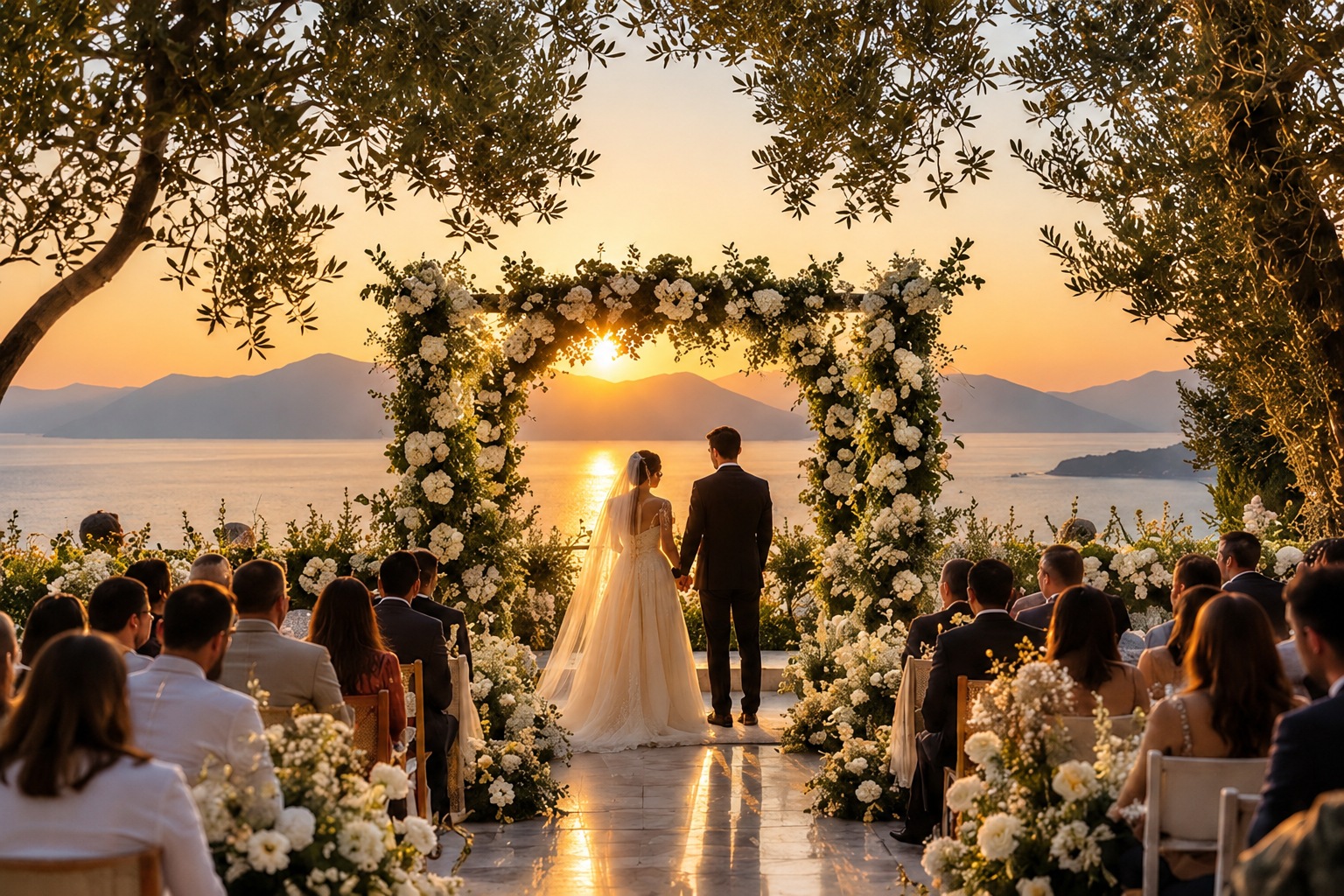
A wedding is a celebration present in virtually every society, but there is no single way to experience it. The ceremony, the rituals, the duration of the celebration, the role of the family, the food and even the way guests participate are shaped by histories and customs passed down through generations.
In some cultures, the wedding is concentrated into a single day. In others, the celebration becomes a sequence of gatherings, ceremonies and parties. There are societies in which the family occupies the center of the celebration; others place greater emphasis on the intimacy of the couple. In some, gastronomy is an essential part of hospitality; in others, religious rituals and symbols guide the celebration.
Even so, there is one point in common: a wedding is rarely only the union of two people. It also represents the union of families, communities, histories and values.
This is precisely why observing weddings around the world reveals more than differences in customs. It reveals different ways of understanding what it means to celebrate.
In India, for example, the structure of the celebration itself may consist of a succession of events, such as mehndi, haldi, sangeet, the ceremony and the reception, transforming the wedding into an experience that unfolds over several days. Family participation also plays a central role in many of these celebrations.
In Italy, food, family and conviviality occupy an important place in the celebration. The structure of the meal itself can become part of the ritual of welcoming and gathering guests, while customs such as the distribution of sugared almonds, or confetti, preserve symbolic meanings associated with marriage.
In Japan, by contrast, Shinto tradition reveals a different relationship with ritual. The ceremony is marked by symbolic gestures and a carefully defined structure, showing how a wedding can also be an expression of spirituality, ancestry and continuity.
These differences help us understand why a wedding cannot be analyzed only through its appearance. Behind every choice lies a particular idea of family, hospitality, tradition and celebration.
And perhaps it is precisely this diversity that makes weddings one of the most interesting social expressions to observe: the rituals change, the flavors change, the garments change and the settings change — but the desire to transform a union into a moment worth remembering remains.
The Time of the Celebration
Across cultures, the time devoted to a wedding says a great deal about what a society understands celebration to be. While some weddings concentrate a ceremony and a reception into the same day, others turn the union into a sequence of gatherings that may extend over several days.
In the luxury segment, that difference takes on even greater meaning. When budget and infrastructure allow, time ceases to be a logistical matter and becomes part of the experience offered to guests. The wedding may begin before the ceremony, with a welcome dinner, family gatherings or experiences prepared for guests, and end only after the reception, with brunches, excursions or other moments of shared time.
India is probably one of the most expressive examples of this logic. In the Indian premium market, weddings have been structured as multi-day experiences rather than celebrations concentrated on a single date. A 2026 survey by Panigrahana Weddings points to an average duration of 3.2 days for luxury weddings, while market sources describe celebrations composed of different ceremonies and events across that period.
This characteristic transforms the very function of the wedding. Each moment may take on an identity of its own: an arrival reception, a religious celebration, a night of music and dance, a more intimate meal or a farewell gathering. For guests, the celebration is no longer simply attending a ceremony; it becomes taking part in a program built around it.
In the Indian luxury market, this transformation is also linked to the growth of destination weddings. In some cases, couples reduce the number of guests in order to invest more in the quality of each individual experience, choosing destinations and properties capable of hosting family and friends for several days.
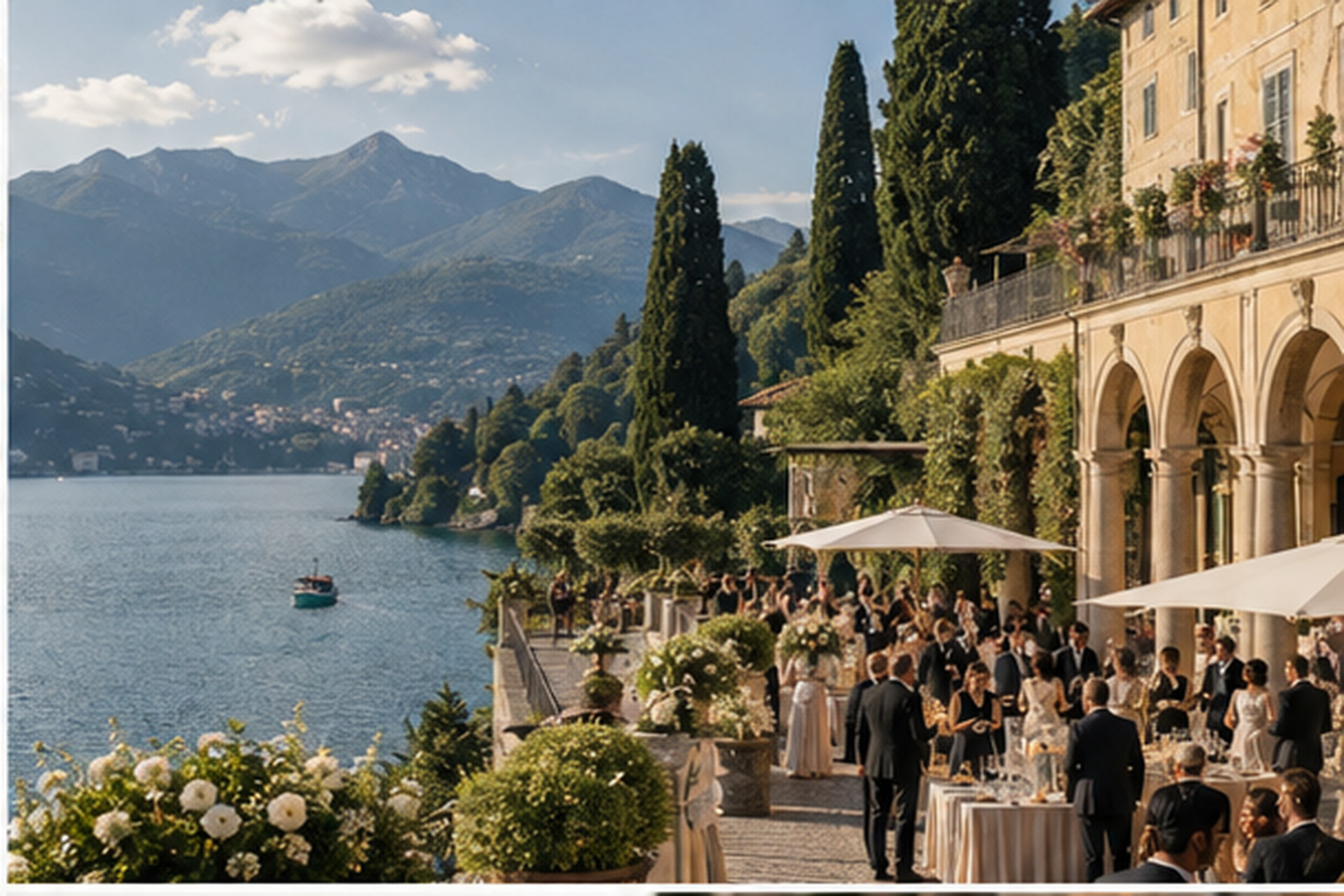
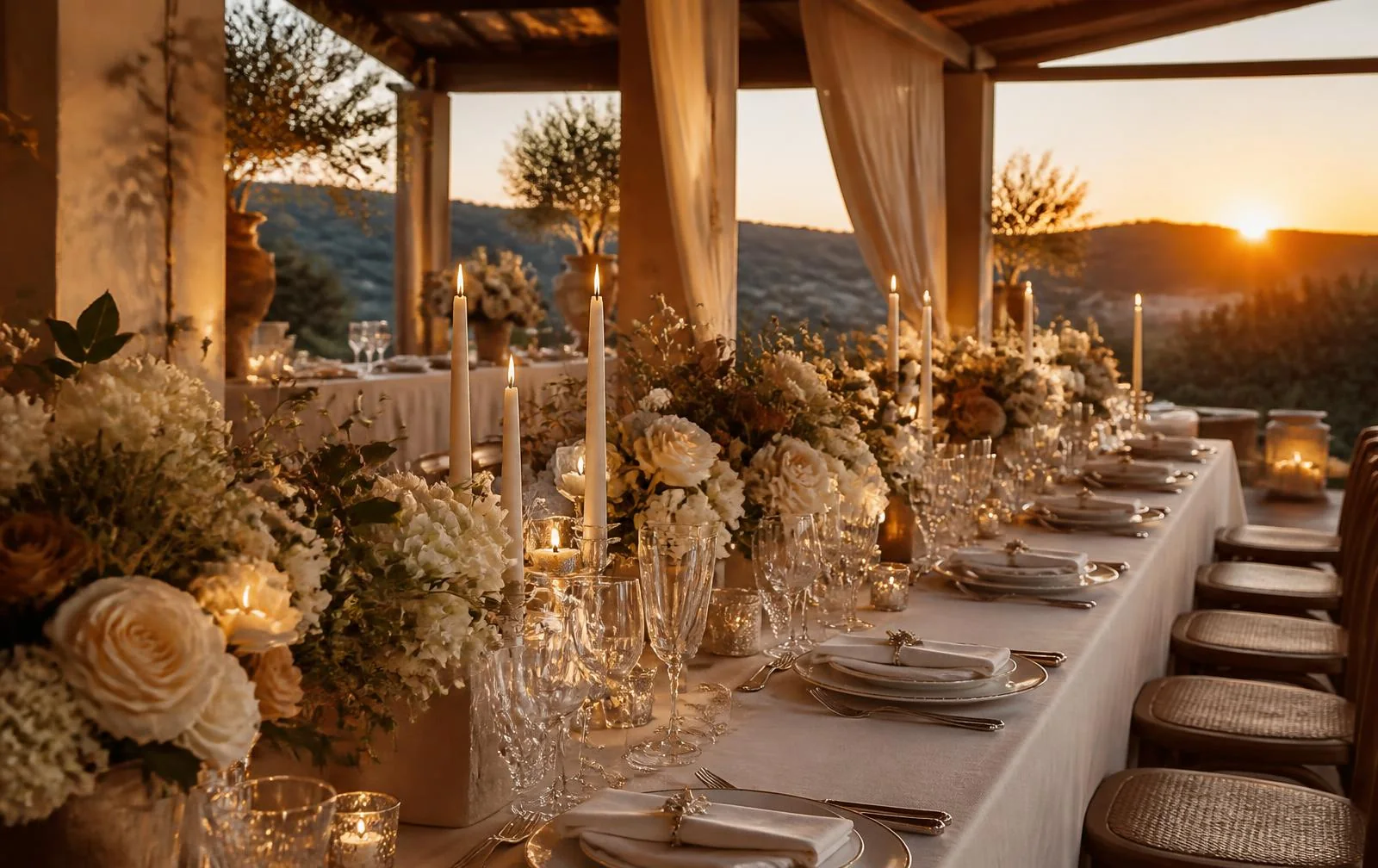
Italy presents a different, though equally interesting, logic. In destinations such as Tuscany, Lake Como, the Amalfi Coast, Puglia and Sicily, the luxury wedding may also be structured as an experience lasting more than one day, drawing on the property itself, the landscape and the local gastronomy.
In France, the concept of the wedding weekend also finds its place, particularly in historic properties and châteaux, where the exclusivity of the setting makes it possible to bring ceremony, accommodations, meals and shared time together on a single occasion.
Japan offers an interesting contrast. Even when the celebration does not extend over several days, the experience can gain depth through the precision of its rituals and the importance attributed to the ceremonial moment. In a Shinto ceremony, for example, the wedding is built around a ritual sequence of its own, while the reception may incorporate contemporary elements.
The comparison reveals something important for the luxury market: there is no single definition of a sophisticated celebration.
In India, it may lie in the multiplicity of events and in their duration. In Italy, in the combination of setting, gastronomy and hospitality. In France, in the exclusivity of a property and in the art of receiving. In Japan, in the precision and meaning of each ritual.
The common ground lies elsewhere: when there are resources to expand the celebration, time ceases to be a measure and becomes part of what the occasion itself offers.
The Family at the Center of the Celebration
In many cultures, a wedding is not understood solely as the couple's decision. It is also a family event, capable of bringing different generations together and reaffirming bonds that extend well beyond the bride and groom.
This characteristic becomes particularly evident in India. In the luxury wedding market, family participation remains decisive: a SEBI study on luxury and ultra-luxury weddings in India estimates that 70% to 80% of these celebrations are financed by parents. The same survey describes weddings that extend over several days and incorporate experiences planned especially for guests, such as excursions, parties and wellness activities. (SEBI, 2025)
The figure helps to clarify an important difference from the contemporary Western idea of the wedding as essentially a project of the couple. In certain markets, especially among families of greater wealth, the wedding remains a collective decision, in which parents and other relatives may participate actively in the choices and the investments.
This dimension also appears in the very structure of Indian celebrations. Ipsos research on luxury in India indicates that a wedding may involve three to seven distinct events, creating a kind of architecture of occasions that mobilizes not only the couple but different members of the family and their social circles. (IPSOS, 2026)
At the same time, this model does not necessarily mean that the contemporary wedding is moving toward ever larger celebrations.
An interesting shift is taking place precisely within the luxury market: some families are reducing the number of guests in order to devote greater attention to those who genuinely take part in the celebration. In 2026, Vogue India observed the growth of more intimate weddings among Indian couples, with guest lists that, in certain cases, went from hundreds of guests to a few dozen.
The change does not diminish the importance of family; on the contrary, it can allow couples more time and presence with their closest relatives and friends.
It is a particularly interesting shift when we look at contemporary luxury. Exclusivity no longer depends exclusively on the number of people invited; it also lies in the quality of the time shared with them.
In France and Italy, meanwhile, the family remains deeply associated with the celebration, though it may share space with another dimension we will explore further on: hospitality. Welcoming guests, the table, gastronomy and time spent together become ways of expressing care and belonging.
For the luxury market, this difference is fundamental. When the family is no longer merely invited but becomes part of the construction of the celebration, the experience must be conceived for far more than two people.
Rituals That Span Generations
Across cultures, weddings change in format, absorb new references and follow social transformations. Even so, certain rituals endure. They are passed down through generations because they are not merely part of the ceremony; they carry meanings that connect the present to the history of a family and a community.
In India, this continuity is particularly evident. Ceremonies such as mehndi, haldi, sangeet and the rituals performed before the sacred fire remain present in many celebrations, though their form and importance vary according to region, religion and community. The haldi, for example, brings family and friends together to apply a turmeric paste to the couple; the mehndi involves the application of henna; and the sangeet turns music and dance into a celebration shared by both families.
What is interesting is that these rituals do not necessarily remain unchanged. In the contemporary luxury market, they may acquire new dimensions of production, design and hospitality without losing their symbolic function. A traditional ceremony may take place at a historic property, at an international destination or within a program carefully built around the guests.
The tradition remains; the way of presenting it is transformed.
In Japan, this relationship between tradition and contemporary life takes another form. Shinto ceremonies preserve a ritual structure of their own and a strong symbolic dimension, while many contemporary weddings combine traditional Japanese elements with Western references.
In France and Italy, we find a similar movement. Customs relating to family, gastronomy, toasts and gifts remain present in different regions, yet coexist with contemporary celebrations, international destinations and new ways of welcoming guests.
This capacity for adaptation is perhaps precisely what allows certain rituals to remain relevant.
A tradition need not remain unchanged in order to remain a tradition.
It may change setting, absorb new languages and take on new proportions without losing what gives it meaning.
In the luxury segment, this relationship becomes even more important. When investment allows greater creative freedom, tradition and innovation can be developed together: an ancestral ritual may receive a contemporary presentation; a religious celebration may coexist with a reception inspired by haute cuisine; and family symbols may be reinterpreted within an entirely current aesthetic.
It is in this balance that the contemporary wedding finds part of its sophistication.
It is not only about preserving the past, but about deciding what deserves to remain present.
Gastronomy as Part of the Ritual
At a wedding, food rarely serves merely a practical function. It nourishes, welcomes, brings people together and, often, represents the identity of a culture. In different parts of the world, sitting at the table, sharing certain dishes or offering a sweet to guests can carry meanings that go far beyond the act of eating.
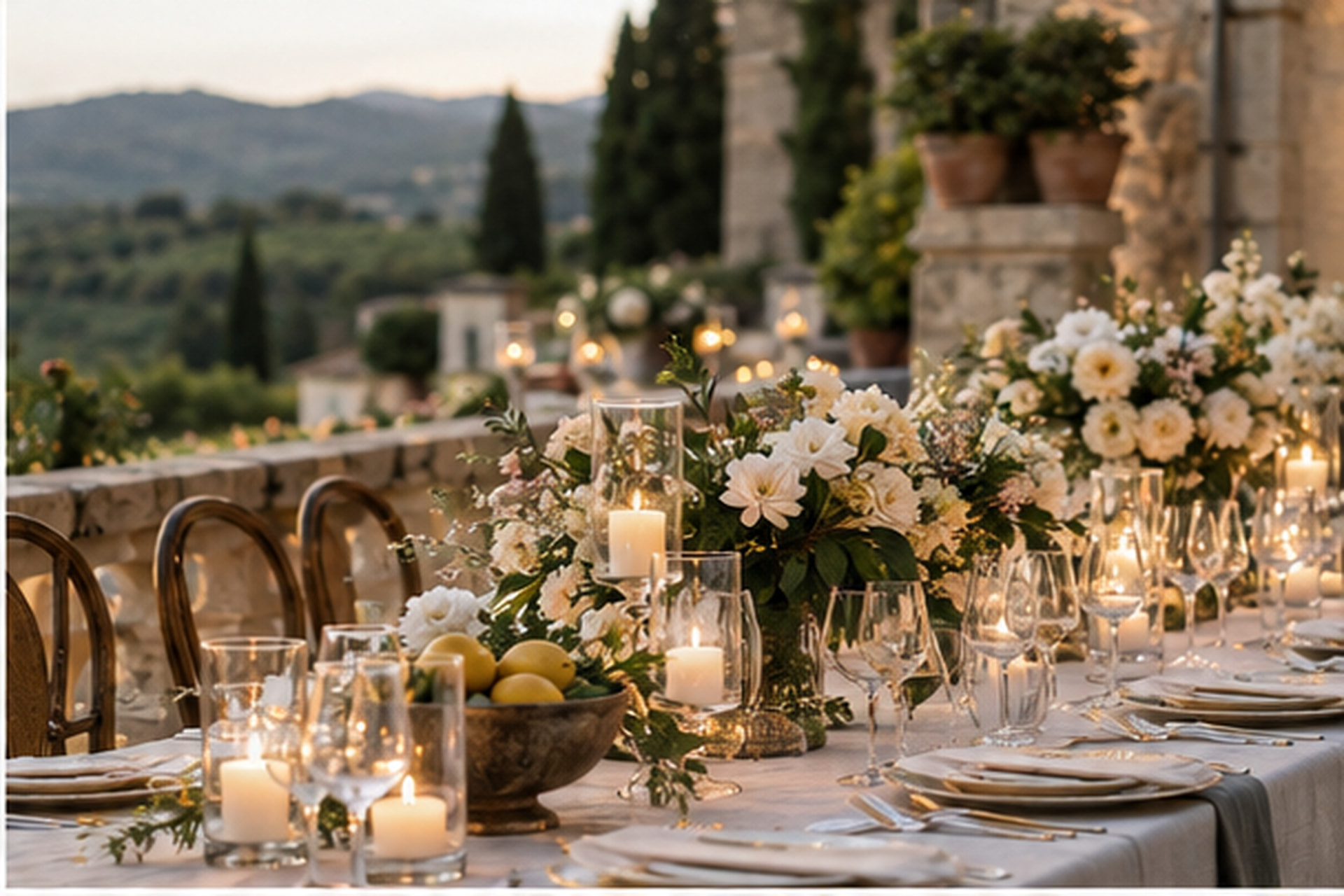
In Italy, this relationship is perhaps one of the most pronounced. The meal occupies a central place in hospitality and can become one of the great moments of the celebration. The Italian wedding traditionally values conviviality around the table, regional cooking and abundance as forms of hospitality. Sweets such as confetti, the sugared almonds traditionally offered to guests, also carry symbolism associated with the celebration.
In France, gastronomy speaks a different language. More than abundance, there is a particular appreciation of technique, presentation and culinary tradition. The croquembouche itself, the traditional French wedding dessert, shows how a gastronomic element can also acquire a visual and ceremonial dimension.
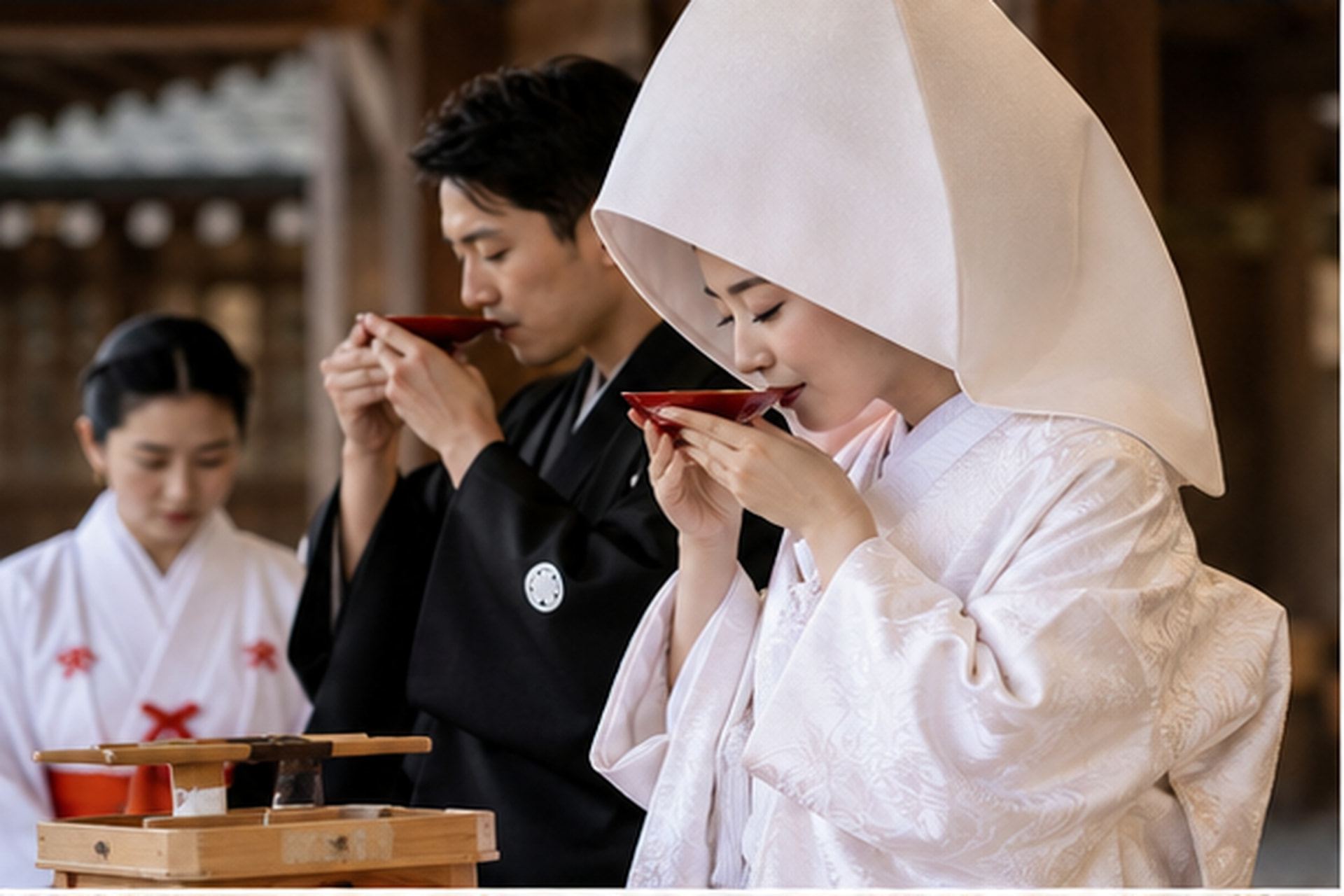
In Japan, food may play a symbolic role in the ritual. In Shinto ceremonies, for example, the san-san-kudo uses sake within a ritual sequence representing the union of the couple. The drink is no longer merely part of the reception; it becomes part of the language of the ceremony itself.
In India, gastronomy reflects the collective dimension of the wedding. The multiplicity of events allows different moments to offer different culinary experiences, while traditional sweets and preparations form part of the hospitality extended to families and guests. In a celebration that may extend over several days, eating also means staying together, talking, celebrating and sharing.
This difference in roles is particularly interesting when we look at the luxury market.
Gastronomy ceases to be merely a service and becomes part of the curation of the celebration.
What will be served, how it will be presented and when it will appear can be considered together with the space, the décor, the music and the profile of the guests. In celebrations of greater investment, the meal may take different forms throughout the event: a more intimate welcome dinner, a relaxed lunch, a formal reception or small gastronomic experiences distributed across the festivities.
It is an important shift in the very idea of luxury. It is not about offering more food, but about offering a more carefully constructed experience.
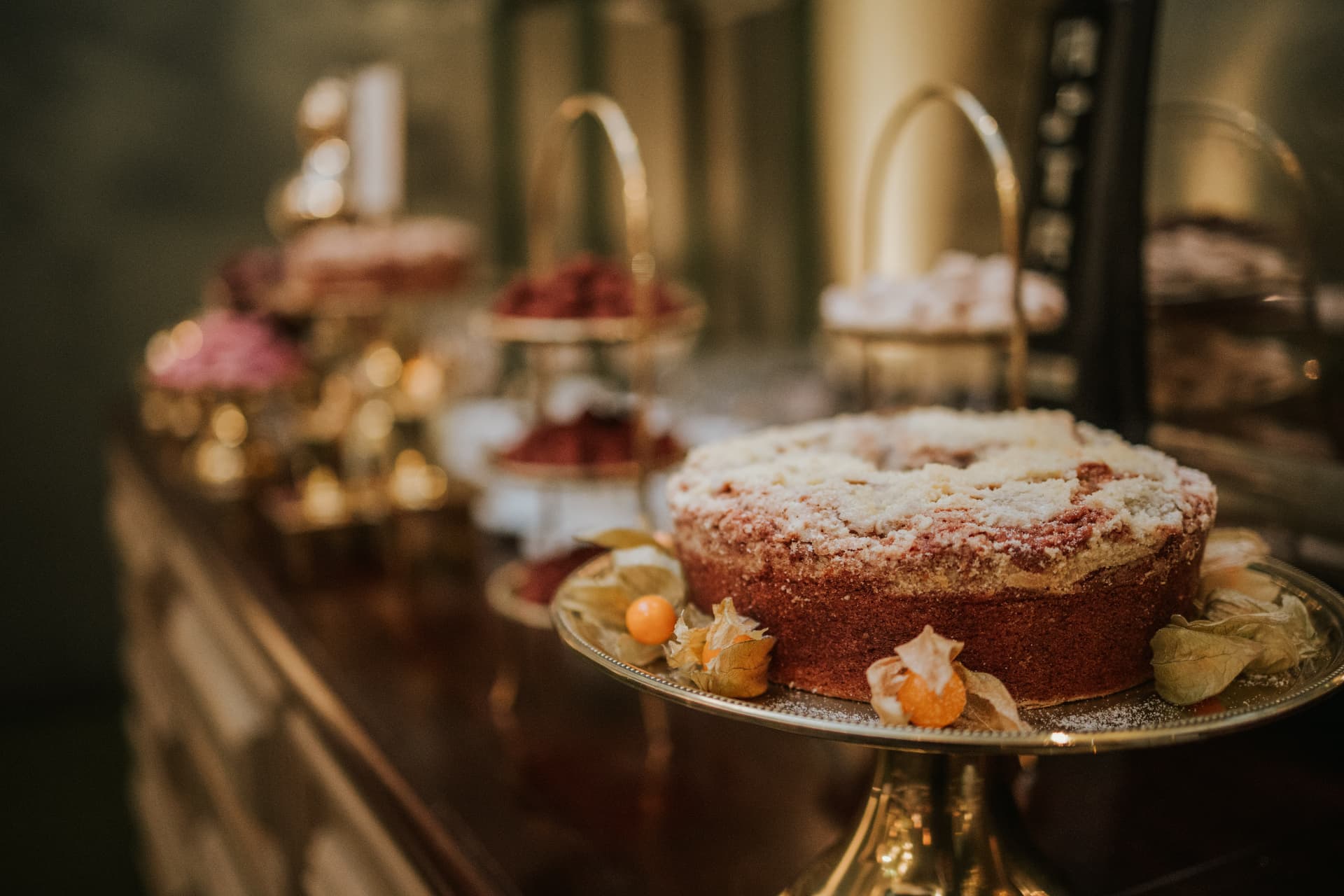
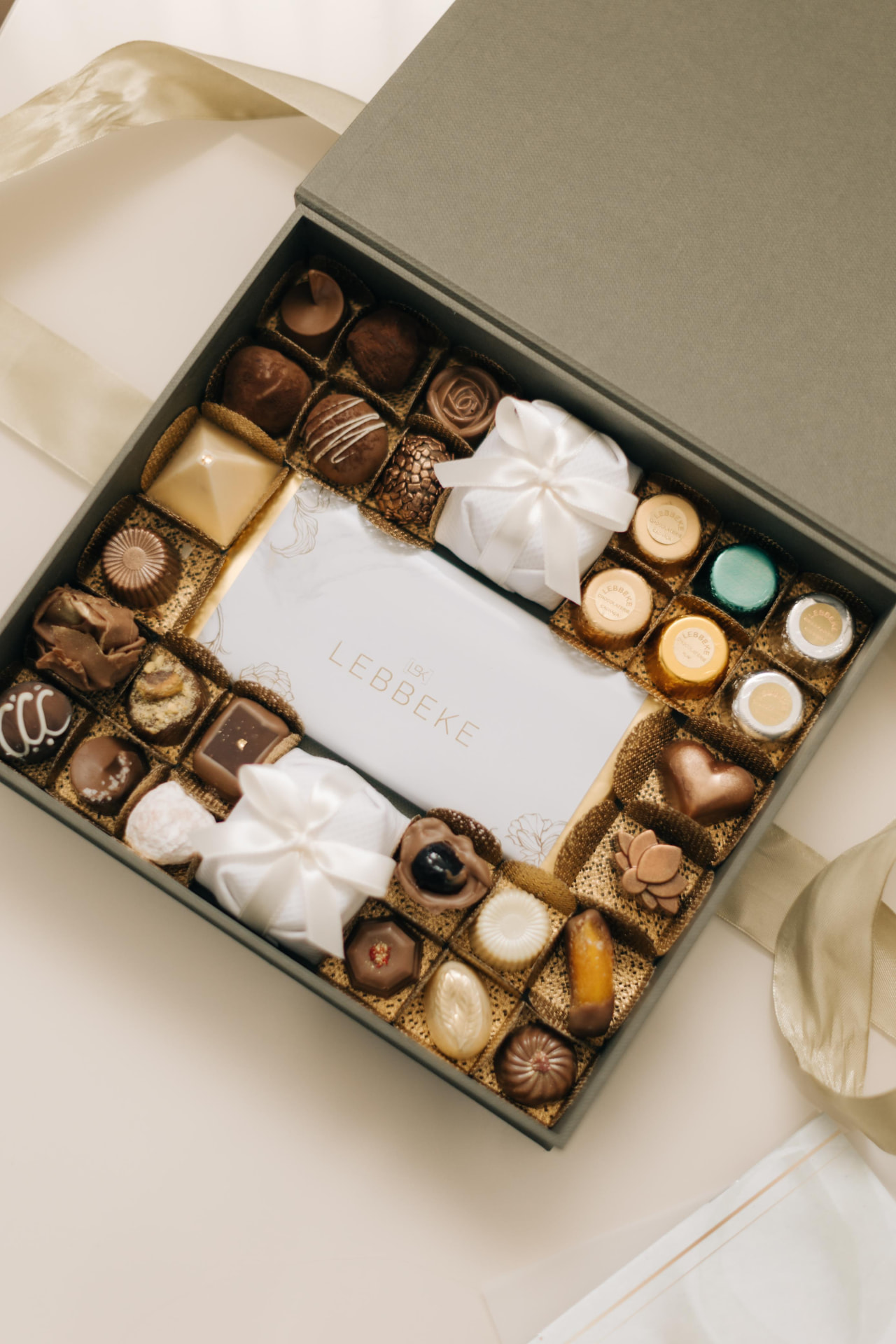
In this context, sweets and chocolates may also occupy a different position. They no longer appear solely as the end of a meal and begin to take part in the narrative of the celebration — whether on a dessert table, in individual pieces offered to guests, in keepsakes or in creations developed especially for that occasion.
Perhaps that is why observing the gastronomy of weddings around the world reveals something greater than culinary differences.
Each culture finds in food its own way of celebrating and welcoming.
And in the contemporary luxury wedding, this language acquires new possibilities: gastronomy also becomes a way of telling the couple's story.
Aesthetics, Attire and Identity
A wedding also reveals itself in what can be seen. Garments, colors, fabrics, jewelry, flowers, architecture and the objects chosen for the celebration are not merely decorative. In many cultures, they carry symbols, memories and codes that help to communicate the identity of those who celebrate.
The bride's attire is perhaps the clearest example. In different societies, wedding attire goes beyond the idea of a special garment for a single day. Fabrics, colors, embroidery and accessories may represent prosperity, continuity, belonging or a particular vision of the beginning of married life. Studies by the Metropolitan Museum of Art on wedding attire across cultures show precisely how materials, colors and motifs can carry specific meanings, and how some of these pieces are preserved and passed down from one generation to another. (THE MET, 2026)
In India, this dimension is particularly evident. Saris, lehengas, jewelry, embroidery and colors vary according to region, religion and community. Red has a strong presence in many Hindu traditions, associated with prosperity and fertility, yet there is no single Indian wedding garment. The diversity of the country also expresses itself in the way people dress.
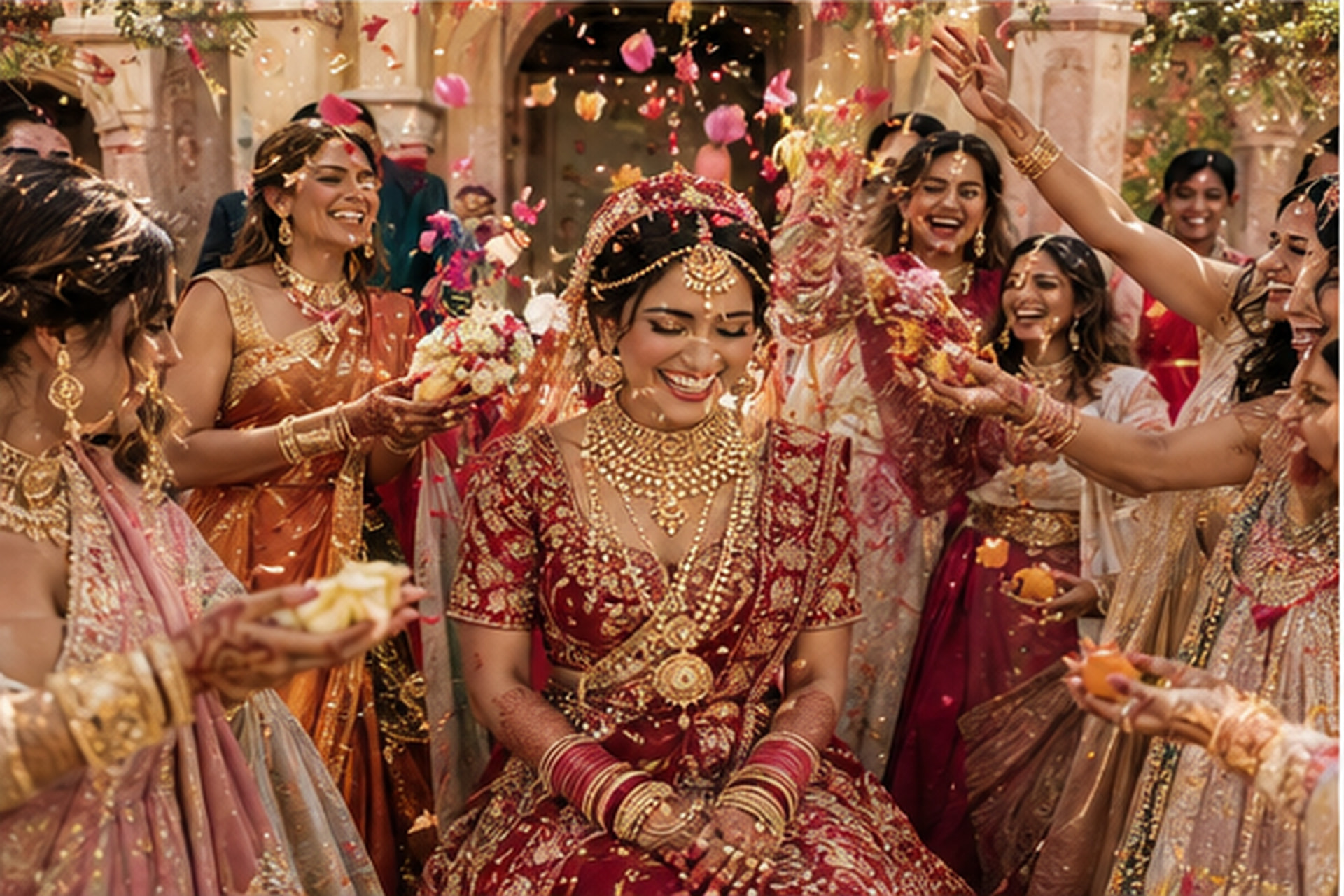
In Japan, aesthetics speak an almost opposite language. The shiromuku, the traditional bridal garment of Shinto ceremonies, presents a carefully codified visual language. The white, the accessories and the very structure of the garment are part of the ritual language of the ceremony.
In Europe, the influence of white bridal attire became particularly strong, yet even within that model there are differences of style and tradition. In Italy, for example, elements of color may appear in association with regional customs, while in France the aesthetics of the celebration frequently engage with architecture, heritage and tradition.
What is interesting is to see that aesthetics and identity are not separate things.
The way a celebration presents itself can reveal where a family comes from, which references it values and even how it wishes to be remembered.
In the luxury market, this relationship takes on another dimension. When investment allows greater creative freedom, aesthetics cease to be merely a choice among trends and become a language of the celebration itself.
The dress may engage with the architecture. The flowers may come from the landscape of the destination. The stationery may draw on elements of the family's history. The table may incorporate gastronomic or cultural references.
It is at this point that contemporary luxury distances itself from mere display.
It is not necessarily the number of elements that makes a celebration sophisticated, but how coherently they come together.
A celebration may be extremely elaborate and still feel generic. Another may be visually more restrained and convey a far stronger identity because every choice has a reason.
This logic also helps explain an important tendency in contemporary weddings: the combination of cultural references and personal language. A couple may preserve a family ritual, wear a traditional garment at a given moment and, at the same time, build an entirely contemporary reception.
In 2026, for instance, a multicultural wedding held in Sicily combined Indian traditions, American references and elements of Sicilian culture across different ceremonies and settings. The attire followed that narrative, alternating Indian garments, contemporary pieces and elements tied to the occasion. (VOGUE, 2026)
Aesthetics, therefore, need not choose between tradition and modernity.
They may be precisely the space where the two meet.
Perhaps that is one of the most interesting characteristics of the contemporary luxury wedding: turning personal, cultural and family references into a celebration that could belong to no other couple.
When the Guest Is Also Part of the Experience
For a long time, the organization of a wedding was centered primarily on the couple. The venue, the ceremony, the décor and the party were conceived around what the couple wished to create. The guest was present, but not necessarily considered part of the experience.
In contemporary weddings, especially in the luxury segment, that relationship is beginning to change.
The guest becomes part of the experience itself.
This transformation can be perceived in different ways around the world. In India, multi-day weddings naturally expand that dimension. When family and friends remain together throughout an entire program, the celebration must consider accommodations, meals, transfers, entertainment and moments of shared time.
In Italy and France, the setting may play a similar role. A wedding held at a historic property, at a winery or against an emblematic landscape offers more than a ceremony. The destination itself can become part of the experience, creating opportunities for meals, excursions and gatherings before and after the wedding.
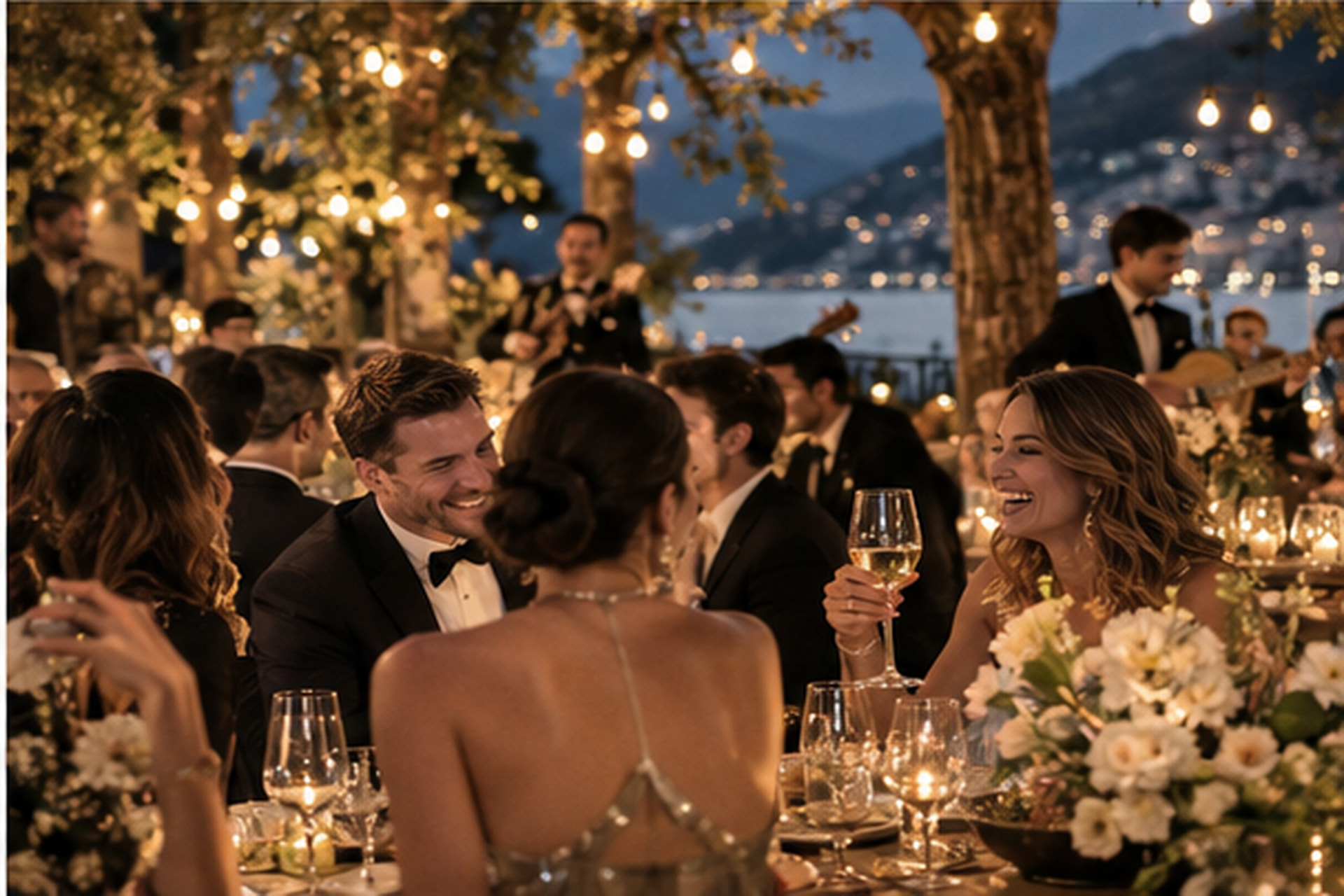
In Japan, the logic may be more restrained, yet equally attentive. The formality of the ceremony, the care given to ritual and the very organization of the reception demonstrate a particular concern with how participants experience each moment.
In all these cases, there is an important shift of perspective: it is not enough to think about what the couple wants to offer; one must think about what the guests will feel, perceive and remember.
In the luxury market, this concern becomes even more relevant.
When resources allow greater creative freedom, details that might seem secondary become part of the curation: the way the guest is welcomed, the comfort of the accommodations, the gastronomy, the flow through the space, the moments of rest, the small gifts and even what happens between one celebration and the next.
Luxury, in this context, often lies in what does not need to be announced.
A carefully organized arrival. A table designed to prolong conversation. A sweet offered at a particular moment. A room prepared to welcome the family. An excursion chosen to introduce the destination. A keepsake with a genuine connection to the couple's story.
These are gestures that do not necessarily increase the scale of the celebration, but can increase its depth.
This logic also helps explain why the concept of the destination wedding has gained such strength among couples of greater means. When the wedding takes place far from the couple's home city, the guests' journey ceases to be a logistical matter and becomes part of the narrative of the celebration.
The chosen destination, in this case, is not merely the setting. It becomes part of the experience offered.
And this also changes the responsibility of those who work with weddings. Planners, hotels, venues, designers, chefs, pastry chefs, florists and every other professional involved no longer act only in isolated stages; they take part in building an integrated experience.
For the couple, this means thinking beyond the ceremony and the reception.
It means asking:
What do we want our guests to take with them when they leave this wedding?
It may be a gastronomic memory, a landscape, a conversation, a ritual, a discovery, or simply the sense of having lived something truly special.
In the contemporary luxury wedding, receiving well is no longer merely an obligation of hospitality: it becomes an essential part of the celebration.
Four Cultures, Four Ways of Celebrating
Observing weddings around the world does not mean finding a universal formula for celebration. Quite the opposite: the more cultures we observe, the more evident it becomes that sophistication can take very distinct forms.
In Italy, it may lie in the relationship between setting, gastronomy and conviviality. In France, in the art of receiving and in the combination of heritage and savoir-faire. In Japan, in the meaning attributed to rituals and in the precision of each moment. In India, in the ability to bring families, traditions and different celebrations together into a collective experience.
Four cultures, four ways of celebrating — and one same question: what makes a celebration memorable?
The answer perhaps lies precisely in what each culture chooses to value.
Tradition and Modernity
Weddings have a particular quality: they are celebrations that look simultaneously to the past and to the future. They gather customs inherited from other generations, yet take place within societies that continue to change.
For this reason, tradition and modernity need not stand on opposite sides.
Across cultures, contemporary weddings have found ways to preserve certain rituals while transforming their presentation, their context and even their scale. What remains is not necessarily the original form, but the meaning that continues to make sense to those who celebrate.
In India, this relationship is particularly evident. Rituals such as mehndi, haldi and sangeet remain present in many celebrations, yet may take on formats different from those of previous generations. The scenography, the music, the gastronomy, the destinations and the very structure of events incorporate contemporary references, while the rituals preserve their cultural dimension.
In Japan, the combination of traditional ceremonies and Western elements demonstrates another way of building that relationship. A couple may hold a Shinto ceremony and, afterward, organize a reception a contemporary reception.
In Italy and France, heritage and modernity also coexist in a particular way. Historic properties, traditional recipes and family customs may serve as a point of departure for celebrations that incorporate design, gastronomy and new forms of hospitality.
This capacity to combine references is especially relevant in the luxury market.
When there is freedom to invest in creative direction, tradition ceases to be an obligation and becomes a choice.
A couple may decide to preserve a family recipe, wear a piece of jewelry that belonged to a grandmother, incorporate a religious ceremony or choose a particular destination because of its connection to the family's history. At the same time, they may build an entirely contemporary aesthetic around those elements.
The result need not look old, nor excessively modern.
It may look authentic.
This distinction matters because contemporary luxury has increasingly valued what carries meaning of its own. Rather than reproducing references simply because they are in evidence, celebrations of greater investment may seek elements capable of establishing a genuine relationship with the couple's story.
It is also why personalization does not simply mean creating something different.
To personalize is to choose what deserves to remain.
A ritual may be preserved because it represents a family. A recipe may endure because it recalls childhood. A garment may be reinterpreted because it belongs to the couple's culture.
In this sense, modernity does not necessarily represent a rupture with the past.
It may be the way each generation finds to carry forward what it considers important.
The Wedding as Experience
Looking across cultures, one conclusion emerges: the contemporary wedding is no longer merely a ceremony that takes place at a given place and time.
It can be understood as an experience built over time, in which every choice — from ritual to gastronomy, from music to architecture, from the welcome to the last detail offered to a guest — contributes to shaping a memory.
This transformation does not mean that weddings are becoming alike. On the contrary. The more freedom couples have to choose how they wish to celebrate, the more room there is for cultural, family and personal differences.
In the luxury market, this shift is particularly evident because investment makes it possible to turn details once considered accessory into fundamental parts of the celebration.
Time can be expanded. The destination can be chosen for the experience it provides. The gastronomy can be created especially for the guests. A family ritual can be given a new interpretation. The aesthetic can be shaped by the couple's story.
The celebration then becomes less about gathering as many elements as possible and more about selecting the right ones.
It is a logic close to the one found in other contemporary expressions of luxury: exclusivity does not necessarily mean excess. It often means access to something carefully considered, difficult to reproduce and deeply connected to the person who chose it.
At a wedding, this may mean a celebration that could not be reproduced exactly for another couple.
Because their story is different. Their family is different. Their guests are different.
And, consequently, the experience should be too.
Conclusion
Perhaps it is precisely in their differences that weddings reveal their most universal dimension.
The rituals change, the languages, the garments, the flavors and the ways of gathering people. So do the reasons why certain traditions endure or are transformed.
Yet in all of them there is one same gesture: marking a moment that will never happen in the same way again.
That is what makes a wedding so singular — and perhaps explains why, despite every change, it continues to hold such an important place in societies.
To celebrate is also to give form to time.
References
METROPOLITAN MUSEUM OF ART. Wedding Attire: Three Cultures, One Celebration. New York: The Metropolitan Museum of Art, 2026.
SEBI. Luxury Weddings and Ultra-Luxury Weddings. India, 2025.
VOGUE. The Bride Wore a White Lehenga for Her India-Meets-Italy Wedding in a Sicilian Baroque Church. 2026.
IPSOS. Luxury Reimagined: How India's Timeless Culture Is Shaping Its Luxury Future. 2026.
PANIGRAHANA WEDDINGS. State of Indian Weddings 2026. 2026.
Get our next editorials.
Receive the next issues of the Observatory, along with trends, stories and exclusive LEBBEKE content, straight to your inbox.
No spam. Unsubscribe anytime.