
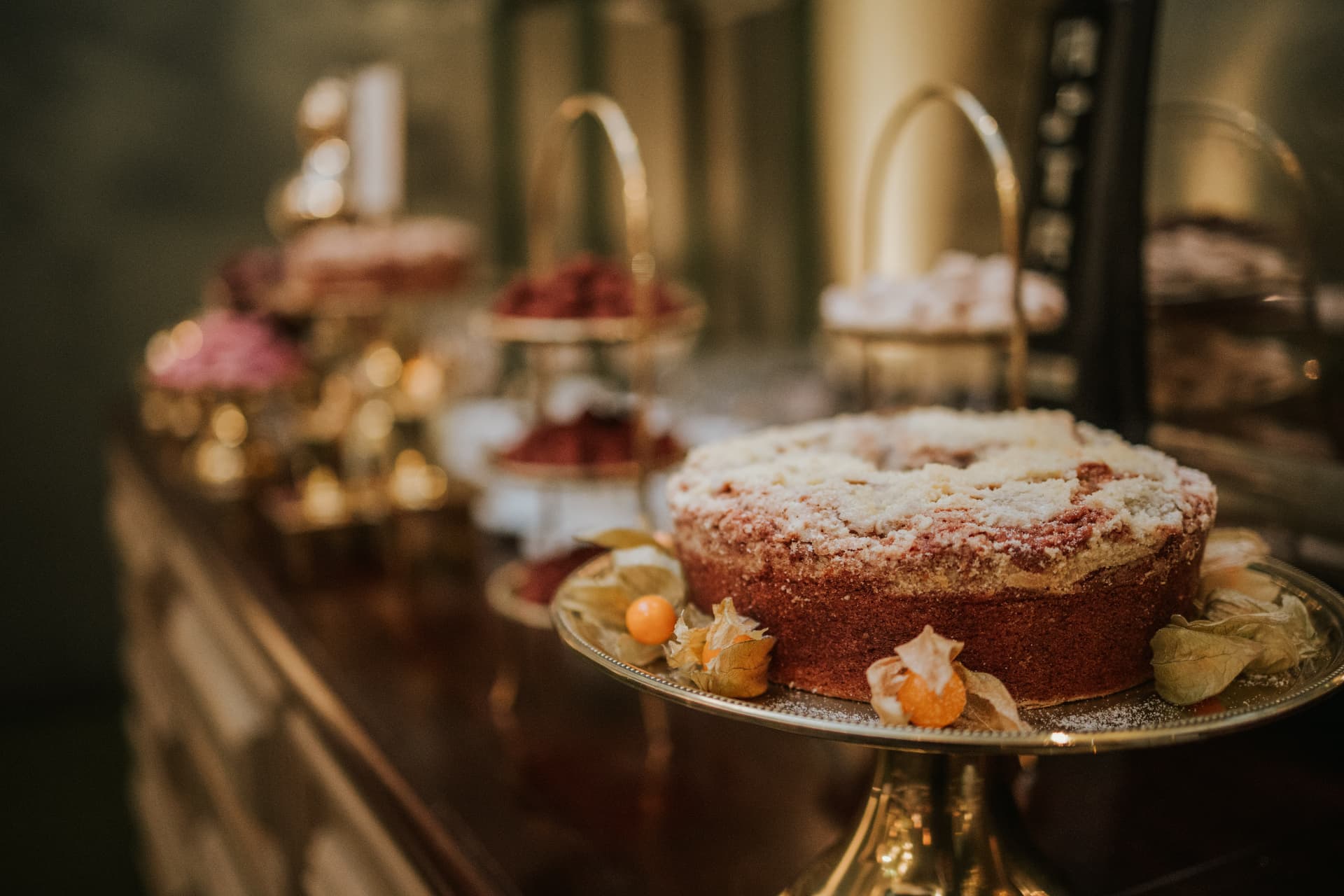
Understand the role of the cutting cake, individual slices, and petit fours in the guest experience, and discover how these elements can make the celebration's finale even more special.
The Role of the Cutting Cake in a Wedding
The cutting cake holds a special place among wedding traditions. More than just a culinary component of the celebration, it represents one of the most symbolic moments of the party: the moment the newlyweds cut the cake together for the first time. Over generations, this gesture has come to signify the beginning of a new chapter in their shared life and their wish to share this happiness with family and friends.
After this moment, however, the cake's role changes. In many weddings, the cake does not remain on display throughout the celebration. After the cutting ceremony, it may be taken to the kitchen, where the catering team portions it to be served to guests, either passed around or presented on pre-plated dishes.
This gives the cake two distinct roles within the celebration. The first is symbolic, marking one of the most anticipated moments of the occasion. The second is gastronomic, allowing guests to enjoy the dessert throughout the event. Although these two stages are part of the same tradition, they occur at different times and fulfill equally important objectives.
Individual Slices Reinvent How Cake Is Served
Since the cutting cake is often taken to the kitchen shortly after this symbolic moment, many celebrations end up losing one of the most striking elements of their decor as soon as the cut is made. At the same time, traditional service depends on the catering team to ensure every guest receives their portion.
In recent years, new ways of serving cake have emerged, precisely to make the experience more practical and seamlessly integrated into the celebration. Among these, individual slices have become an increasingly interesting option. Prepared and presented in elegant packaging, they remain on display with the dessert table or in a dedicated area throughout the party.
This approach allows the cake to remain part of the celebration's visual experience even after the cut, preserving its presence throughout the event. Furthermore, it offers more freedom to guests, who can choose the ideal moment to enjoy it without relying exclusively on passed service from the catering team.
Another benefit lies in the guest's own experience. If they prefer to enjoy the cake at another time, the individual packaging allows them to take it home, preserving its presentation and extending the memory of the celebration long after the party has ended.
More than simply a change in serving style, individual slices represent an evolution in the experience offered to guests. They bring together practicality, thoughtful presentation, and freedom of choice, demonstrating how small adaptations can make the celebration even more welcoming and memorable.
Petit Fours: The Perfect Coffee Accompaniment
The end of a celebration tends to be a more tranquil affair, a time when many guests enjoy the final moments of the party by chatting, reconnecting with relatives, and savoring a coffee before departing. It is precisely in this context that petit fours find their place.
Unlike the sweets served on the main table or the desserts offered during the celebration, petit fours are not intended to replace any of these elements. They are designed to accompany coffee, offering small, meticulously crafted portions that harmonize with this final moment of the celebration.
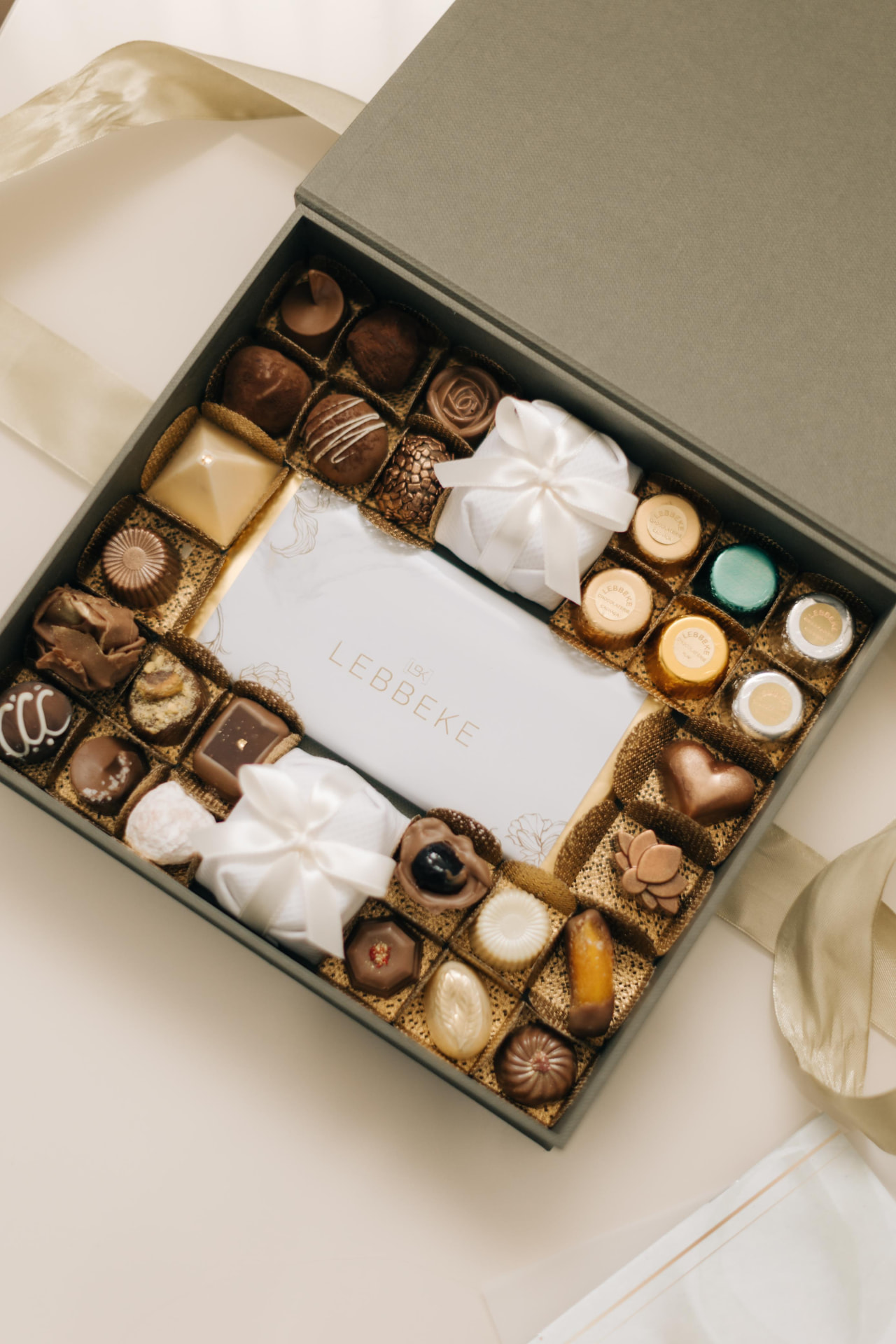
Among the most traditional options for petit fours are madeleines, financiers, shortbread biscuits, mini pastries, and other patisserie specialities prepared in small portions. In many celebrations, this offering may also be complemented by mini-truffles and mint thins, offering different flavors to accompany coffee as the party winds down.
Although a small in size, petit fours reveal a thoughtful attention to the guest experience. They demonstrate thoughtfulness in planning every stage of the celebration, making the finale as welcoming as the reception itself and leaving guests with a final, flavorful memory before departure.
Are They Indispensable?
As with many elements of a wedding, there is no hard and fast rule that dictates the presence of a cutting cake, individual slices, or petit fours. Each celebration has its own character, and the decision to include these elements depends on the style of the event, the couple's preferences, and the experience they wish to create for their guests.
Nevertheless, these elements remain common features of weddings because they each play a distinct role throughout the event. The cutting cake preserves one of the party's most cherished traditions. Individual slices offer a practical and elegant way to serve dessert. And petit fours accompany coffee, making the reception's conclusion all the more welcoming.
More than simply following traditions, the choice to include these details reflects thoughtful consideration for the guest experience. When every stage of the celebration is thoughtfully integrated, the wedding is no longer just a sequence of happenings but a collection of moments that will live on in the memories of all who attended.
In a wedding, some moments linger in the memory precisely because they extend the experience of the celebration far beyond the main events.
The cutting of the cake marks one of the most symbolic moments of the party. Individual slices allow this experience to continue throughout the event, while petit fours accompany coffee and conclude the reception with finesse and hospitality.
While each serves a different function, they all share the same purpose: to turn thoughtful care for guests into a welcoming and memorable experience. More than following tradition or keeping up with trends, considering these moments is a way of ensuring the celebration remains present in guests' memories long after the final toast.

Get our next editorials.
Receive the next issues of the Observatory, along with trends, stories and exclusive LEBBEKE content, straight to your inbox.
No spam. Unsubscribe anytime.